Countdown to Dark: Moon Knight in Hulk Magazine

The year was 1975, and Moon Knight’s future was not very clear. Created as a villain for the comic book series Werewolf by Night, Doug Moench and Don Perlin designed the character to simply supply conflict for an issue or two. Nothing more, nothing less. His stint on the printed page after that was relatively short, appearing in only a couple of other projects, most notably Marvel Spotlight numbers twenty-eight (28) and twenty-nine (29) where he battled the very conventional Conquer Lord. The character for the most part did not have a big game plan, and Moon Knight was simply expected to just fade away as a long-forgotten blip in the Marvel Publishing Pattern. Ralph Macchio saw something though.

At the time, 1978, Macchio was an assistant editor to Special Projects Editor Rick Marschall. The team was working on the forth coming HULK! magazine, and Macchio was put to task finding a back-up feature to go alongside the publication’s main showcase. Ideas of Namor the Sub-Mariner and Shanna the She-Devil mulled over in Macchio’s head until he came to the conclusion of Doug Moench’s second-tier man of mystery Moon Knight.

The rest is history as they say because HULK! led to 1980s ongoing Moon Knight series, which led to some excellent comics work from both Moench and Bill Sienkiewicz, which then led to future Moon Knight stories and the character’s existence in this very day.

Cover of MoonKnight: Countdown to Dark Collection

But the HULK! issues had to happen first. Without them, Moon Knight is still the throw-away villain with limited purpose and future. Those HULK! issues were Doug Moench’s chance to really tell the character’s story, and reading those comics with that thought in mind provides you with a solid understanding that this could have possibly been the last Moon Knight story. The character was then and still partially is a risky endeavor to pursue as his existence does not match that of Batman or Superman. No one (except for me) is clamoring for Moon Knight comics; it would be easy for the character to get lost in the shuffle due to his lack of popularity. The character is a C-lister, and Ralph Macchio wanted him to be the second-stringer in the back of HULK!. For all Doug Moench knew though, Moon Knight could have been at the front of the magazine, staring as the main feature because reading those stories certainly shows quality rather than a feeling of something mashed together to fill page space.

The stories carry a quality of literature in how they subtly suggest while presenting a plot that is actually pretty simple. If you look at an author like Hemingway, he writes short stories in a style where not a whole lot happens. The majority of the writing and purpose of the story is the setting or internal conflict or ambiguous lines of dialogue.  Now, while I am not completely comparing Doug Moench to Ernest Hemingway, because I do not necessarily feel comfortable doing that, I do see a few similarities between these Moon Knight stories and say Hemingway’s Nick Adams stories when it comes to showing little while alluding to more.

Hemingway’s “Big Two-Hearted River,” which is the conclusion to his Nick Adams saga, basically provides an account of Nick hiking through some grasslands and ascending up a hill where he then camps and eventually finds a river and goes fishing. That is the plot, and it is not a whole lot, almost bare minimum in the events department. Moench does this in his own way, a way that is certainly only fit for comics. Stories like “The Big Blackmail” and “Countdown to Dark” do have eventful plots, but when these plots are held in a context of comic book plots they are not really that outgoing. The plot for both of these stories, as they are connected, is Moon Knight stopping a terrorist plot and then having a final battle with a big, bad villain. That is pretty standard for super-hero comics, and these comics, on the surface, read like they are just going through the motions of bronze age practice.

So, both of these plots are almost boring and certainly could appear as repetitive to selected audiences, but what is important is what is being said underneath as the authors provide subtle indication for larger themes. “Big Two-Hearted River,” even though a fishing story, goes a bit bigger as Hemingway describes the environment of the river, the way the fish live in it, how Nick reacts to it, and how the swamp appears dark and placid further along the way. These small indications are the clues to the theme and invite the reader to think, but they are not necessarily placed in the forefront of the text as instead they are briefly mentioned. The Moon Knight stories pull the same trick. At one instance Moon Knight is at battle with Lupinar, The Wolf, carrying on in true comic book style, yet suddenly the fight stops leaving Moon Knight in a moment of looking at what had just occurred, muttering the words, “I see. But I don’t want to.” This happening takes place over three panels, pretty brief, but the nature of how that moment stops you has an affect, bringing about feelings of what is really going on with this character. The moment though is completely surrounded by the traditional plot.

This design for a story packs such an impact I feel because it creates this feeling that the comic almost knows more than you do. The comic presents itself one way, but really underneath the dressing there is a whole other side to it. There is also this really cool aesthetic value to that idea. I like looking at these stories as pulp adventures because of how romantic and dated they can feel. And not dated in a bad way, saying that the comic does not work today, but more in terms of it feeling from a certain era. The swashbuckling and pattern they spotlight are so very bronze age, but underneath it all are themes and ideas that could work in almost anytime. The ideas of not knowing who you are and wanting yourself to be a certain way are timeless as they are very true to the human experience.
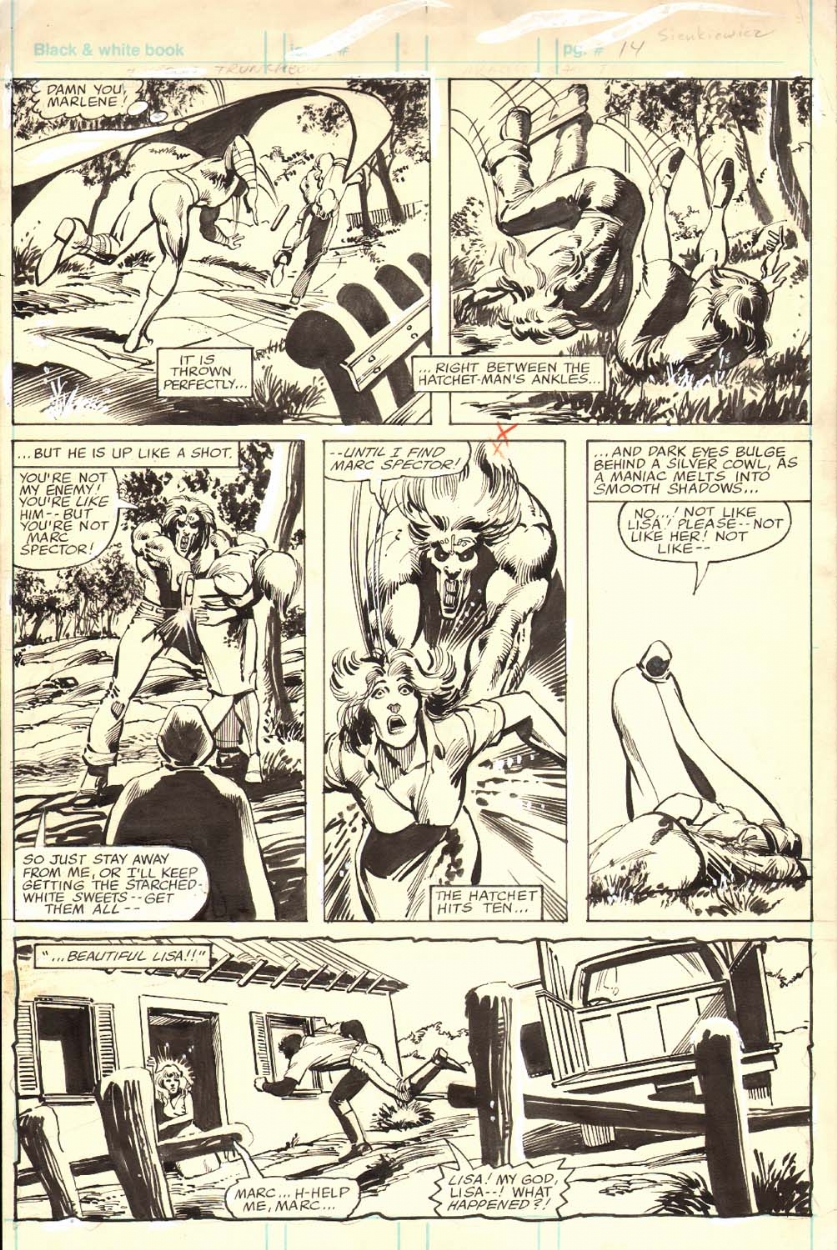
Page of “Night Born Ten Years Gone” by Bill Sienkiewicz

And that is the Moon Knight character. He is a costumed adventurer in some classical sense, but beautifully does Doug Moench show that the super-hero can face conflict from the inside and that these characters as concepts can really say much about us. He provides Moon Knight with the three identities of Jake Lockley, Steven Grant, and Marc Spector and pits them against each other to show the inability to choose an idea of a life.  Marc Spector, assuming that is the real, base identity of the character, makes choices as to what role he is playing at different moments. Is he Lockley or Grant? That is up to Spector, or is it? The identities seems to almost dictate themselves as each role has its own abilities, and according to what needs done Spector has to assume the specific roles. It is like he does not even have the choice because for the character the job of Moon Knight needs done, and the job of Moon Knight needs done because the character is driven toward a sense of wanting better for himself.

Take a look at the character’s origin: a former mercenary hired by a committee of men to make a hit on a werewolf (man). The character was a villain, and Marc Spector knows this about himself. That is why he becomes Moon Knight; Moon Knight is Spector’s opportunity to be something better and not just a soldier working for pay. Being Moon Knight brings about a sense of mission and higher calling. He is still a soldier, but he is a soldier concerned about ideals rather than self. Except Marc Spector does not always go away. “Night Born Ten Years Gone” is a great example of this as Marc’s brother, Randall, basically goes on a killing spree because of the wrong done to him by Marc Spector. This is the past catching up with the character, and it is a past of violence and wrong that he cannot escape. Marc Spector, and the old life he used to live, is a part of him – it IS him – and it only brings problems as Randall’s free-for-all leads to the stabbing of Marlene, Moon Knight/Steven Grant’s lady.

Really that is only one of example of many to suggest Marc Spector’s restlessness with himself. Look back to “Countdown to Dark” once more as Moon Knight defeats Lupinar, The Wolf by killing him. Lupinar does aid in this as he does throw himself upon the sword, but the act of that occurrence even being written suggests the troubled past Spector cannot escape. The blood spill and reaction by Moon Knight, “I see. But I don’t want to,” says to me that the character knows who he is at heart, the mercenary, but he does not want to be that. Even the way “Night Born Ten Years Gone” ends continues this trend as Moon Knight cannot save his brother Randall who ends up impaled by a tree. The true, classic super-hero would have saved the villain, allowing him to be punished accordingly, but Moon Knight does not save Randall. He lets him die. It is sort of this weird takeaway for the character. He tries to be the good, blue-blooded American hero, and for the most part does an alright job, but at the very end of these missions his hopes of saving the day are ripped away from him as the blood is spilled and he is reminded of his questionable past.

It is this idea of not being able to escape from who you are, no matter how much you desire to be someone else. That to me is Moon Knight. The villain who wants to be the hero. I think there is certainly an element of a man who does not know what he wants, but the ultimate point of Moon Knight is facing the truth of who you are.

A very Marvel idea, if I may say.

Doug Moench lays this all out in six back-up stories, and he completely defines his character, taking him from two-dimensional villain to 3D bag of internal struggle. Moon Knight was no longer a throwaway.
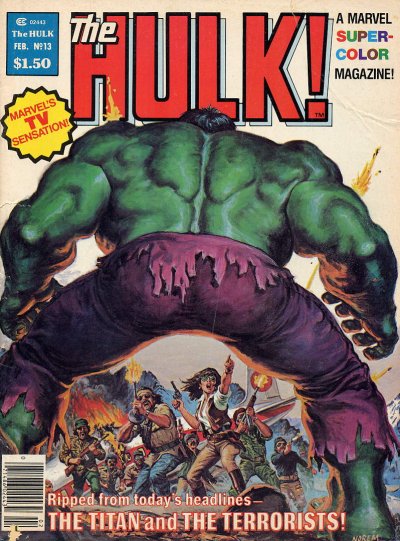
Cover of HULK! Magazine #13

And how about Bill Sienkiewicz? I, with my ability as a writer, do not even have the vocabulary of words to express how I actually feel about his work here. For one, it is early Sienkiewicz where he is clearly channeling Neal Adams. I think anyone can say that; it is not hard. I can add though that I feel this stage of Sienkiewicz is actually perfect for these stories because they fit that idea of the traditional look and feel. Ok, maybe Neal Adams is not so traditional of a comic book artist. His work was a game changer, and it certainly carries its own identity. When compared to the Sienkiewicz we now know and love though, Adams is certainly more traditional. I just like how the styling of the artwork goes along with the styling of Moench’s writing: traditional yet subtly more. Because of HULK! magazine’s printing privileges, as it was in “SUPER COLOR” which was proudly stated on the covers, the artwork carries with it a bit more depth and life. The work has shadows, and as simple as that may sound, it adds a lot. It may look traditional at first, but the shadows bring out a bit more. They bring out the questions and the grayness – a point certainly mirrored by Marc Spector’s own character.

Moon Knight was not guaranteed a long running shot. The character was designed as a throwaway, not necessary destined to have his whole story told. But the chance was offered, and Doug Moench seized the moment and gave his character purpose. Looking on it now, The HULK! stories had to be right otherwise who knows where the character may have ended up?  Who knows if Moench and Sienkiewicz would have gotten together? Who knows if anyone would care about this character?

Luckily, The HULK! stories are well-crafted. Some of my favorite comics, to be honest.
2 Comments

Filed under Moon Knight

Image Addiction Review: The Li’l Depressed Boy #2

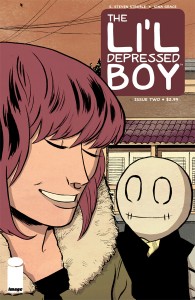
Cover of The Li'l Depressed Boy #2

I have posted a new review over at Image Addiction on The Li’l Depressed Boy #2. Here’s what I had to say:

“This issue of The Li’l Depressed Boy presents a smooth readability which is most certainly a result of the fine dialogue. S. Steven Struble writes the conversation and flirtation between Li’l Depressed Boy and Jazmin in a style that oddly resembles a sense of real life. The jokey nature and the back-and-forth teasing gives the characters’ interaction a sound that is easy to hear inside your head.  That quality moves the comic along well because the book depends on the dialogue. There are events happening as Li’l Depressed Boy plays video games and bowls, but really the book keeps those things in the backdrop as it places the majority of its weight on the relationship or the quest of it…”

Read the rest HERE. Also, read the comment that follows it as it is a part of the piece.

Leave a comment

Filed under Image Addiction Review

Image Addiction Review: Herculian #1

Cover of Herculian #1

I have posted a new review over at Image Addiction on Herculian #1. Here’s what I had to say:

“This comic book is a great example of Erik Larsen’s ability. True, Savage Dragon usually conveys that point, but with this collection of strips and off-the-wall tales an excellent sense of Larsen’s creativity and artistic skill comes forth, smacking you upside the head. Herculian carries an identity of a classic independent comic book. The pages and the ideas are all the product of one man, all directly thrown down in strategic patterns without being filtered through the perspectives of other collaborators. The book is 100% Larsen. A point really enjoyable when it comes to the department of coloring…”

Read the rest HERE.

Leave a comment

Filed under Image Addiction Review

The Digital Thing

The future, right? I’m not sure.

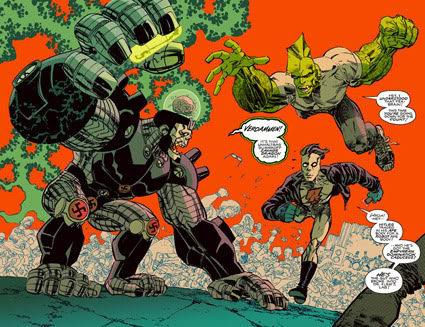
This week Bleeding Cool (as reliable as it may be) dropped word that one of my favorite comics, Savage Dragon, was going to now follow a day-and-date digital release plan through Comixology.

Artwork from Savage Dragon

It is always at least interesting to see a comic book series go forth to test the day-and-date digital market. The decision is a step forward toward this “utopian” concept held by a majority of the online comics scene. The idea of new comics digitized the day they drop in print is the ideal model for most people, the model scribbled on almost all notepads describing peoples’ desires. The plan sounds so well on paper; comics can once again flourish. The ready availability and the scent of future make digital comics seem limitless and offer the chance to once again reclaim a large comics reading audience. Day-and-date only increases this with the excitement of new books every week, the ability to follow the form, and hell if the price can drop below the print price…digital is unstoppable.  

So, Savage Dragon, or any book for that matter, adopting day-and-date brings the ideal a step closer. At least the ideal for most people. I’m not so sure if it’s my ideal, or that I really buy such a belief that digital comics will have such an effect. Why? Well, digital comics clearly already exist, and I’m not feeling much of an effect so far.

Granted, the numbers Comixology, or any digital comics distributor, may do are not available. The information on downloads is mostly unknown to the general online perspective, so for all I know maybe digital comic downloads are totally insane and comics are blossoming again in the mainstream. The publishers, Marvel and DC, do not seem to be giving off this impression though. For all it’s worth, I think they are both still trying to figure this digital thing out. If Comixology’s numbers were so high and so consistent and digital comics were strengthening the industry would it not be believable that Marvel and DC might speed up their push for digital, putting out more day-and-date digital releases rather than the random mini series here and there? I would think so, but they are not. Marvel and DC are still playing it safe with this digital thing, charging still high prices on digital editions in order to keep the print and local comic shop market intact.

Digital is an uncertain ground as of now even though it has existed prominently for about a year. Remember the iPad dropping and how the Marvel Application was at the attention of the media, even making a splash on the iTunes Store home page? That was plenty of attention for comic books, but if the digital numbers are not as strong as people hope after all that…well. Yeah, the selection was sketchy at the beginning you may argue, but the digital products available at that time were still comic books – comic books that most people probably had no knowledge of and would not know if they were good or bad until read. Drop the argument that day-and-date will change all, bringing people in, and I still have to question it. Again, people who are new to comics and know nothing of what is new or old will not be persuaded by day-and-date.  That is an incentive to the current readership. Even then though, day-and-date is only an incentive when the price of digital is cheaper than print which is not happening because digital numbers are not as strong as they need to be to persuade Marvel and DC to go that direction. See that, a cycle. In order for digital to become cheaper than print, digital must outperform the print market but how does that happen when the current readers buy print and no new audience comes to buy digital?

Marvel App Screenshot

Maybe it will just take time for everything to grow and for digital comics, or comic books in general, to latch their teeth into a larger audience. That is always a possibility. My own personal opinion though says that the problem is not availability or price or day-and-date but interest. I do not believe the interest in comic books, or really reading as a leisure, exists with many people today. Too many alternatives to reading exist, and for most these alternatives carry much more of a flash and sex appeal than text on a white page or a book filled with illustrations. Reality TV, Xbox, drugs, alcohol, sports, the internet…those are America’s past times in the 21st century; reading carries more of a hard work connotation. The use of books and idea of concentrating on words runs along with the thoughts of school work, lectures and other dull activities. People do not want that. Not saying reading will die away – reading will always have a place in the world – , but I can see reading for leisure becoming more of a counter-culture activity rather than a tradition practiced by most. And that is just reading in general, not even comics. With comic books I think the problem is even a bit bigger. It is still lack of interest, but the lack of interest stems more from I think the general perception people have of comics. The medium is not seen as something artful or sexy but more as something surrounded by the odd interests held by the geek and nerd culture: Comic-Con, cosplay, the Hulk vs. Superman argument. That reputation holds a strong connotation that I feel most look at negatively.

So if the problem is interest, how does digital fix that? I do not believe it does, unless digital suddenly makes comics attractive and not nerd fodder. I’m not saying suddenly try to make comics “cool” by ditching our geek attitudes and such. I actually feel like that counter-culture identity is a part of the grand aesthetic that makes comic books what they are. Maybe we should just go with that? The idea of comics culture being this small, intimate understanding – why not use that to the advantage? Instead of worrying so much about digital and making comics widely available, why not keep them kind of obscure and in print? As the world goes to pixels, would a print comic book not stand out and automatically attract interest?  Instead of conforming and following the digital media revolution why not stand aside and have comics follow their own path? Instead of catering to an invisible, potential audience why not quit worrying, make good comics and party with the community already present?

I just think it’s kind of fucking stupid to be so worried about digitizing comic books when they are already their own cool, unique thing in print. Sure, the numbers are drifting downward as sales slump, but it’s a bad economy to use the typical excuse. That doesn’t mean print suddenly sucks and we need digital. It just means people are broke at the moment, not being able to buy print or digital comic books. People will come back though, and those interested by the uniqueness of print comic books will catch the bug and start reading. The new generation audience will come. Comics will continue. Let’s just stop trying so hard to keep them going and instead enjoy the party.

But, hey, Savage Dragon is digital, which is cool I guess. Another alternative, which is what digital should be at the end of the day. An alternative, not the only option. I do like my Dragon in print, you know. It’s cool that way.

Leave a comment

Filed under Uncategorized

Image Addiction Review: Savage Dragon #169

Cover of Savage Dragon #169

As usual I review the new issue of Savage Dragon over at Image Addiction. Here’s what I had to say:

“There is always one issue of a comic book series that is all about catching up and re-iterating the status quo. These instances can be risky though because they walk a fine line between good and bad, and it is easy for a writer to make a breather issue boring by filling the page space with plain exposition. Luckily, Erik Larsen is better than this because Savage Dragon #169 allows room for breathing but also does not loose much momentum…”

You can read the rest HERE.

Leave a comment

Filed under Image Addiction Review

No Clever Title Needed

No specific point to make nor any actual essay, but instead a general blog post containing a handful of random thoughts. Everyone does one of these at times. Why not me?

——————————–

Dwayne McDuffie passed away this week. I’ve never been a fan –  not that his comics were bad, I just have not read many of them – but I still felt an effect. We all did, really. That’s the thing about comics and the industry and the community around it. It is so intimate.  When an event occurs or news drops, we all respond in some manner. We all look around at each other through the various internet outlets, expecting a few words. Creators communicate with other creators. Critics to critics. Fans to fans. And all of these words, these respones are visible to everyone around. The culture of comics is tightknit. I may not be familiar with the work of Dwayne McDuffie like most are, but I still felt the impact of his loss. Twitter blew up (rightly so) with many very kind thoughts. The responses from industry professionals had to be the hardest to read. I quickly gained a sense of the man in a short period of time. He was loved by many, and he truly did add to the creative landscape. The most interesting bit about him passed a long Twitter that day had to be this video.

For someone like myself, who knew his name to a degree but not much else, this video really does a great job of telling you what the man was about. A guy after a good story and diversity in comics. Two concepts I can certainly get behind. From what most professionals said about the man, it seemed McDuffie was the type to speak up for what he believed in, yet he could also walk the walk as he did actually do the work, bringing what he believed to life. Milestone, the comics publisher he help found, was the key example of that. McDuffie seemed like a classy dude.

———————————–

The Mountain Goats are close to releasing a new LP entitled All Eternals Deck. Last night they preformed a new song, “Birth of Serpents,” on Lettermen. It was a cool performance, and I am excited for some new Mountain Goats. Check it out.

————————————

I usually grow tired of the “physical media is dead” conversation (Print Still Cool), but PopMatters ran an interesting enough piece this week. I simply just want to reccommend reading the article; a conversation cannot really take place unless it is read. I will say though that what makes this one different is that the author of the article tends to stay away from the “future arguement.” Rather than claiming CDs as dinosaur stuff, he takes more of a critical approach, pointing out the flaws of the format. Oddly, I found this an interesting enough arguement for the death of CDs. The author had a few valid points. Plus, the criticism was not limited to only CDs or Vinyl; MP3s were dissected too.

Overall, it contains a few points worth a thought. Check it out here.

————————————–

A great column from Mr. Tim Callahan this week over at CBR discussing Ray Bradbury’s “Fahrenheit 451” and Tim’s thoughts on comics as a reader. I feel Tim brings up some points I have felt myself before. The idea that the world just throws way too much at us anymore. All of this media constantly being thrown in our face, wanting to be consumed, and because of this a question comes to mind: do we fully appreciate anything anymore? Do we ever slow down and focus?

As for the idea of whether or not everything produced (comics wise) packs substance, I do not feel I could say comics are necessarily lacking. There are more than a few books coming out currently that I feel offer more than the typical cliches. Comics still suck me in more than anything else, and that is because of the substance I find in their stories and artwork.

It’s a good read, whether you’re a comics fan or not. Read here.

—————————————-

I’ve been having fun with this blog so far, and I hope anyone reading has found it at least some what interesting. I know I am certainly not one of the best bloggers online and that my skill as a writer probably lacks, but I have enjoyed this experience and will continue to do so as long as it continues. I’m not sure how you the reader feel about it, so if you are reading this please feel free to leave a comment. I would appreciate it. Again, I know I’m not a cool site like iFanboy or something, but I feel I am offering something here. I would like to hear from you.

Peace.

4 Comments

Filed under Uncategorized

Missed Opportunity: Nick Spencer Writing Supergirl

Supergirl #60 is certainly a tease.  At least it was for me because I have become a pretty big Nick Spencer supporter over the past few months.

 Early on though, I never paid him much attention, and I even kind of disliked Nick Spencer. He was this guy who hit the scene with all of these mini series from Image Comics, and most of them just gave off this vibe of “movie pitch.” At least to me. I saw a book with a Nick Spencer credit on it, and I immediately rolled my eyes. Who was this guy? He just popped up, playing in the medium I treasure the most, and in very little time he picked up a movie option for his Existence 2.0/3.0 series.  What the hell? Was this guy just in it to score Hollywood deals? I had to investigate. Sadly after a purchase of Shuddertown, my opinion did not brighten. The writing was fine looking back on it, but the artwork? I am sorry, but Adam Green did not help me love a Nick Spencer comic. More like it, he only strengthened my “Mr. Hollywood” idea. Green used a lot of photo reference, making Shuddertown a book staring Keanu Reeves, James Gandolfini and Giovanni Ribisi. Maybe that idea would be cool if done intentionally, but I was not feeling that intention. Shuddertown dropped low on my list, and Nick Spencer followed. Boom, shut the door – I was done with Nick Spencer.

Page from Shuddertown #3

But then came Morning Glories, and like the rest of the internet my ears perked up. It was a book that certainly hit hard because of its mystery appeal, but what I found most important was its voice. Right out of the blue, from a guy still relatively new, came this comic that sounded so bold. The first issue packed this excellent vibe of generational confrontation, and Spencer amped that through his style of storytelling. It was like this guy just showed up and said, “Hey, I love Grant Morrison and Bendis.” I mean, that’s how his comics read, but even still I am seeing some other angle to his work as it progresses. Like there is this bit of “Spencerism” emerging. I cannot describe it, but I just find it absolutely exciting to see a guy come into comics and with only one year under his belt already carry a strong authorial voice. He is not just another comics writer producing the standard; he is a comics writer who has things to write about. That is refreshing and important because I feel most comic book writers just come in to tell a story. Nick Spencer certainly tells stories, exciting ones, but the guy also lines his stuff with actual ideas. For one, there is that generational divide. The concept of the youth wanting to do things their way, to prove the adults wrong and show them how it is done, but find that task not so easily accomplished. I see that idea in Morning Glories, but also T.H.U.N.D.E.R.Agents. Technology and its hold on our daily lives? Look toward Infinite Vacation. Granted, it is early in his career and some of these books have only just begun, but I seriously already see these concepts as Spencer’s ground of interest. It is a nice touch, and it makes his books feel important but also interconnected.

Cover of Morning Glories #1 - 4th Printing

I cannot remember why I actually pre-ordered Morning Glories – as typed, I was done with Spencer – but I am so glad I did because that first issue went FAST.  Without my act of pre-ordering, Morning Glories probably would have been lost on me, and I think that would also be the case for Spencer’s T.H.U.N.D.E.R.Agents, Infinite Vacation and this issue of Supergirl.

Which would be a total shame because all those comics are great, even yes, this ONE issue of Supergirl.

What makes it great is what I highlighted above: the Spencer voice. When I think back on it, Supergirl has never been a character to hold my interest. I doubt I have ever picked up a book because she was in it, nor have I really read much of her. Why? To me it did not seem like the character had much to offer. For the time I have been reading comics, Supergirl has been through many changes and her book really has not held a definition. The Supergirl title has just been a part of the Superman line, offering nothing else really. Granted, I know the Sterling Gates run is held rather positively, but I have not read it and really I do not feel inclined to. From what I have heard, it kind of seems like another superhero book. I have read plenty of those. When Nick Spencer was added to the equation though, I was all ears. Again, he is a writer with a voice, and after hearing him talk about his plans for the book on Word Balloon and CBR, I was really excited because what he described seemed like an excellent approach to Supergirl. Plus, the Spencer interests I noted earlier…those would work well on an adolescent superhero.

Issue number sixty of Supergirl brings all of that excitement to life. You read it and it certainly is Metropolis and Kara Zor-El, but it is also very Nick Spencer. Those interests, those concepts Spencer seems to play with are all in that issue and they blend so well with the subject. Supergirl is that youth figure Spencer likes to focus on , but what makes her even more striking is the symbol she represents. The character, wearing the “S” shield and being a part of the Superman family, has something to live up to. That sense of pressure but also responsibility inherently makes her a figure of youth who has something to prove. I think Spencer really shows this well by pitting Kara against four fairly well-known Superman villains. Rather than providing the character with joke threats, Spencer puts her in front of guys capable of knocking Superman down. Kara puts up a fight though. She may not completely succeed, but she does get in a few good hits. Which is important because it shows that the character is trying to be influential or at least that she’s not a push over. Spencer makes Kara this character who wants to represent the “S” symbol well, and show that she is capable of doing the job well.

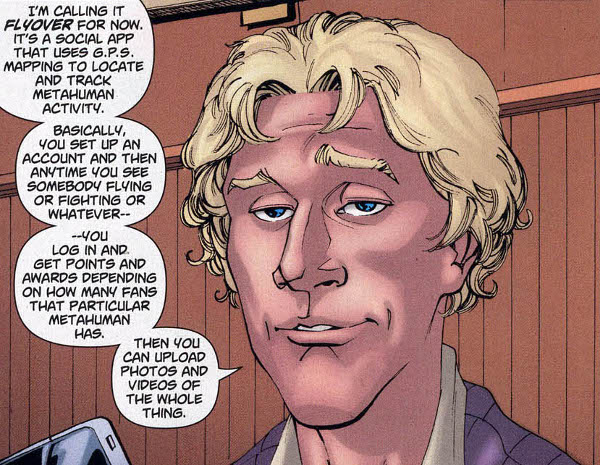
Panel from Supergirl #60

I also like the roll of technology in the issue, which is again another Spencer interest. Yeah, it’s very Social Network-y, but I think the main attraction of the Alex character is his use of technology as the villain. For one, Alex is a very cool, kind of “I know all”, quiet bad guy. For the most part, every time we see him he is just sitting at a dinner table, tapping on his cell phone, but when the character speaks Spencer shapes his dialogue in a very “Aaron Sorkin/Mark Zukerberg” way. Every line the character drops is spot on, and it always feels like the character is manipulating the situation, or that he is almost more aware of it than the other characters. It is affective, but more important than that is the tech aspect. I just really dig the idea of Supergirl against technology. Why? Supergirl is an adolescent, and it is the case nowadays for adolescents to be constantly bombarded by computers and the internet. Really, the same thing is happening to Supergirl in this issue; a villain is basically using his iPhone against her, to manipulate her. I think that is very much a social comment by Spencer, but it is also an interesting angle at which to explore the superhero genre. What if superheroes had to fight the internet? Or better yet, what if the internet was giving superheroes privacy issues? I just find that an exciting idea for a sense of evil in a superhero comic, especially when it is applied to a teenage character because then I feel it is even more relevant.

So there it is. My excitement and expectation was met, maybe surpassed. In that one issue, I felt Nick Spencer made Supergirl matter, and he brought along his bag of interests to throw around the character in able to explore them a bit more. More importantly, Supergirl #60 was a superhero book with a voice rather than just a collection of the usual story pages.

But wait? Nick Spencer did not write the next issue, number sixty-one. Oh yeah,  he left the book…

Or was it more like DC took him off? I mean, I do not really have any substantial evidence that DC actually took him off rather than him leaving on his own, but the vibe I get suggests to me that they did. For one, Spencer did offer two tweets the day the announcement of his leaving was made, and those tweets did not read like it was his decision.

@nickspencer Okay all, breaking some bad news today– I won’t be doing SUPERGIRL after all.

@nickspencer But hey, nobody cry for me! All kinds of cool stuff coming up in 2011, so stay tuned and all that.

(For the actual tweets, click the above links.)

The word choices of “after all” and “nobody cry for me” suggest to me that leaving Supergirl was not his decision. Plus, there were no other comments from Spencer about the situation. If he had decided to leave on his own, would you not think he may have come out and explained that? The entire situation just rang odd to me, especially when Spencer was just talking about his Supergirl run the day before on CBR. The guy sounded excited for this run.

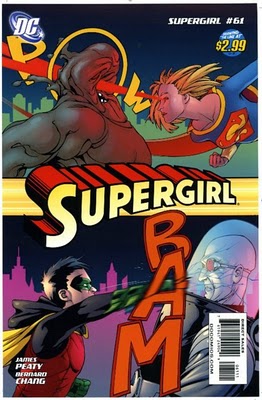
Cover of Supergirl #61

But yeah, for some reason Nick Spencer only penned issue sixty, and I think that is very disappointing because issue sixty-one is a bit below the standard of awesome set in the previous issue. Honestly, I was not even going to bother with the first James Peaty issue, but for the sake of writing this post I wanted to at least give Peaty’s take a chance. I picked it up, went into it with a clear head, but still I kind of found the disappointment I expected. Granted, it is not bad. The issue has some enjoyable moments, Peaty does carry over some of the “Spencerisms” I mentioned earlier, but the voice and style of it all is just missing. The key example has to be the Alex character. As typed previously, Alex of issue sixty was a quiet, manipulative villain who carried a vibe that he was cooler and more sophisticated than the traditional comic book bad guy. James Peaty takes all of that away though and turns Alex into the traditional villain. His version of the character talks much more, and I half expect him to just off on the usual rant about “how he will stop Supergirl!”

To be fair though, there was one scene in Peaty’s issue I did enjoy and that was the Lois Lane/Supergirl scene. Spencer did setup Lois in his issue to have more of an active role. He brought out the journalistic side of her, reminding us of the “go get’em” attitude the character can have and using that to create an extra force of good in the story. Peaty does carry that over, and I felt he wrote it fairly well. He keeps the journalism aspect tied in through Lois discussing research with Supergirl but also having Lois show up in the book in a news helicopter. I really liked that bit. Like some superhero, Lois shows up out of the sky carrying this sense of mission. Like Supergirl, Lois also represents something. It may not be the Superman symbol, but it still is the media or more importantly the freedom of the press and the duty to inform the people. So, I have to give James Peaty a little credit. It was a nice scene.

The issue overall does not compare to Spencer’s though, and it is because Peaty’s issue lacks a voice. Again, it is not a bad comic book, but it does not stray far past the standard. When I look at the situation surrounding this title, I just shake my head and wonder “why?” If DC did remove Nick Spencer, what were they thinking? No offense toward James Peaty, but Spencer is a pretty hot up-and-comer in comics right now and his writing is certainly stronger than most. I mean, DC had him. They HAD him. How could they just loose him? Did they not want their Supergirl book written by someone who has that much attention on them right now? Or better yet, did they not want such a distinct voice writing one of their books?

It is just so odd to me, especially when one issue of Spencer’s run does exist. Just compare the Spencer issue to the James Peaty issue and feel that new found perspective you gain. The thought of what could have been is kind of  unsettling.

Oh well, I guess another general superhero book cannot hurt anything.

Leave a comment

Filed under Uncategorized

The Success of Chew

Does this title sound familiar?

For anyone who has followed my previous online exploits, I am sure you may remember my previous attempt at discussing Chew. If not, do not worry. It was a mess. An essay  inspired by conspiracy theories and a need to mudrake, the original Chew essay was a prime example of an angry, ill-informed comics fan.  I was young (younger), and I had a beef against Chew. For some reason, possibly just plain old aversion, I could not agree with the majority opinion of the book. Everyone loved Chew, and I did not. I saw this as my opening, my chance to really grab some attention. I wished to strike a chord across the internet cosmos. I felt like my opinion had a lasting impact. I felt the need to grab the public by the throat and shake their foundations clean. I did not agree with Chew, and I needed to make this clear. I wrote my essay, and I made it loud. The blog post was made, the link was spread. My work was done. Soon, the internet would come calling my name, holding me up high as the next great personailty in comics whatever.

And, boy, did it get attention. Just not the kind I wanted.

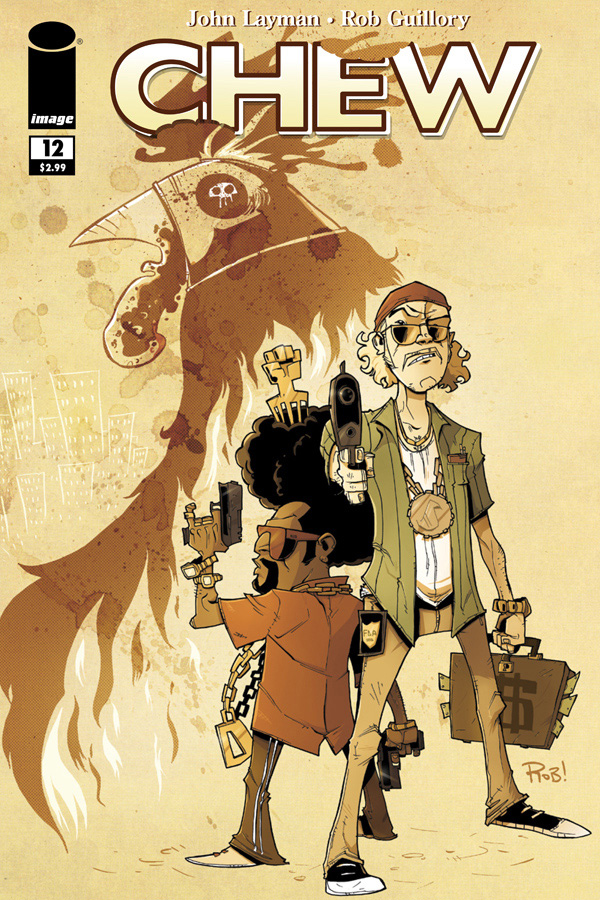
Cover - Chew #12

The Chew essay quickly became  a great example of what was wrong with the comics internet. A manifesto backed only by anger and loose facts, it was a piece that tried to delve into the behind-the-scenes aspects of the book’s success, citing its well-doing because of favoritism and hype. Really, this was not the case but instead my imagination and bias against the book – a bias only developed in order to derive attention. People ran with it, though. The link to my blog was spread and suddenly the comics internet knew me as the angry Chew hater. Even the series artist, Rob Guillory, read my essay and quickly delivered a response, correcting me of my errors and sharing the actual details of the story.

Simply said, in the matter of one afternoon, my perspective on myself and the comics internet experienced a radical…experience. It would take some time and some growing up to truly look back and learn from it, but the effect was certainly felt at the moment of publishing.

In hindsight, I see the errors of my way.

1.)     I should have never felt the need to write something only for the sake of attention .

2.)    I should have actually done the research.

3.)    And, finally, the only way to really judge a comic book is by looking at the work itself.

The third point is the most important, and probably how I should have approached Chew to begin with. The actual work is what matters.. That was the major mistake of my take on Chew, and now I feel it is time to return to the subject and properly explain why I believe Chew has connected with so many readers.

And, hey, don’t worry. I’ve done my reading, and this time I plan to stick strictly to the book itself.

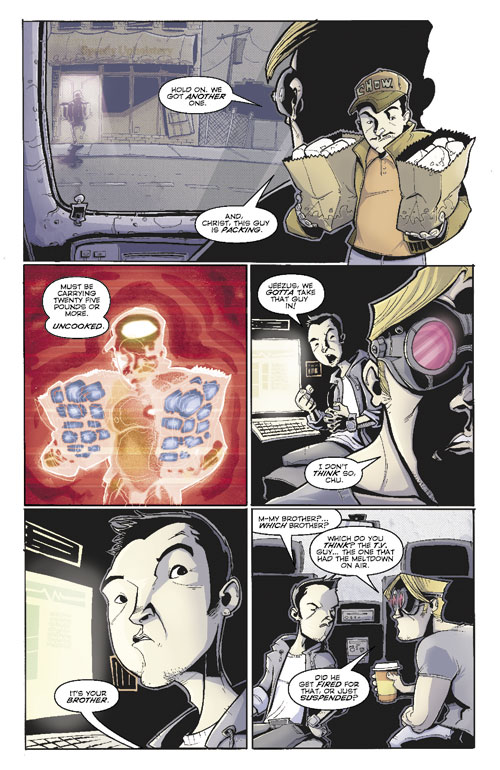
Page from Chew #12

So, let’s break it down. Off the bat, Chew makes a nice first impression by use of its high concept and unique identity: guy eats food, food provides guy with information and the information either helps him solve a crime or seriously grosses him out. It’s a creative concept that builds the intial interest of the audience, as all concept pitches should. Chew is in an even better place, though, because its concept is so unique. The concept is certainly one not heard of before, and it carries a strong ability to make a potential reader stop and think.

All comic books need to carry that sense of identity. So many books are published , yet so many look the same. If you do not believe me, then you should just pick up a Previews Catalog. With this the environment, it is so easy for a book to get lost in the maelstrom and fail. Not Chew, though. This book has the strong sense of identity, and it easily sticks out in either Previews or on the shelf. The title, the concept, the art, the design…they all carry a unique quality, and they all work to gain interest, pulling readers in for a test drive.

The true success of the book becomes apparant upon reading, though. The high-concept certainly adds to the reading experience as it does in identity, but Chew also carries a quality of consistancy. The book is written in a style similar to a sitcom. If I may, the setup:

Take a normal, everyday idea – the show is about a family – yet mix it up with a very out of the ordinary beat – but the family lives on the moon.

Take a normal, everyday idea – Chew is about a cop named Tony Chu – yet mix it up with a very out of the ordinary beat – but Tony Chu is a cibopath. 

It is very sitcom in its approach. Layman and Guillory establish this setup, and they simply hold onto it. With each issue they keep the concept at the core while mixing in a blance of humor, drama and underlying points. Each issue is a complete package holding a consistant tone, and you know what, I feel that is a very smart move. Commercially speaking.

The book provides a sense of dependable comfort to its audience. Every month readers know what to expect of Chew, and every month it delivers just that. Comic fans love this sort of thing. We, by our very nature, love to see the things we enjoy repeated. If we enjoy a specific take on Batman, well, that is the take we will most likely always want to see.

Even as human beings we seek consistancy in our daily lives. We enjoy the routine, and we enjoy the assurance of knowing what to expect. Chew, as well as television sitcoms, tap into that structurally. Now, yes, specfic events do vary in each issue of Chew. The story can offers twists and surprises, but I am speaking in terms of structure and tone. On that level, Chew is basically the same each issue. Going in,  a reader knows that Tony Chu will eat something disgusting, just as Applebee will yell, Amelia will warm Tony’s heart and and John will make us laugh. Those are the book’s components, and Layman and Guillory keep them turning. What Tony Chu eats may vary with each issue, yes,  but when you boil it down Tony still eats.   

This consistancy is what hooks readers in and seeds their love for the series. It’s comfort food in comic book form. On a commercial level, that is a great quality to have. When something is comfortable for an audience, they are most likely to never let go. As stated, we love consistancy in our lives, and I feel that transfers right over to our entertainment. I have to respect Chew for that because the book does what most corporate forms of entertainment wish to. The book provides a nice experience that services an audience and brings them back with each installment.

Page from Chew #1

I do not want to down play Chew as the “comfort food” comic, though. I do like Chew. Upon a recent re-reading of the entire series, I found myself enjoying my time. Why had I not before? I feel my reason for previous dislike spawned from the habit of reading comics month-to-month. As described, Chew, at least to me, reads about the same each month. I tend to not enjoy books of that vain. I like comics that mix it up, or at least pack an energy in each issue. I was not getting that from Chew as I intially read it. Reading the series as the larger piece, though, the single issue does not need to be the focus. Suddenly, I could look past the usual beats and see the larger narrative. Suddenly, I could see what Chew was doing, and what it was about. Suddenly, I kind of liked Chew.

It certainly is still not at the top of my stack, but it is a good comic. Objectively, it is a well written, well oiled machine. Very formulaic, but masterful of the formula, Chew handles its specific elements with grace and confidence, and Layman, as the writer, does a nice job pacing his story in the long form. Each arc, always five issues in length, adds a little bit more to the overall story, and each arc creates a nice sense of building. The characters are progressing at a comfortable rate. The ideas of the book are fun and interesting. The artwork is great to look at.

Simply said, Chew is a good comic book, which is ultimately the most important reason for its success. Yeah, it doesn’t push the medium in anyway, but hey, not every comic can. Sometimes the industry needs those consistant pieces, those bits of comfort food. That’s Chew, and it does a nice job of it.

So whatever the “behind the scenes extras” are, Chew seems to be the Cinderella Story it is because of what it does right. Where other comics fail, Chew picks up the pieces and establishes an identity, a consistancy and just offers an enjoyable experience. True, the book is not my ideal example of a comic book, but I can still respect it and understand its success.

So, yeah, I don’t hate Chew.

Leave a comment

Filed under Uncategorized

It’s a Good Time

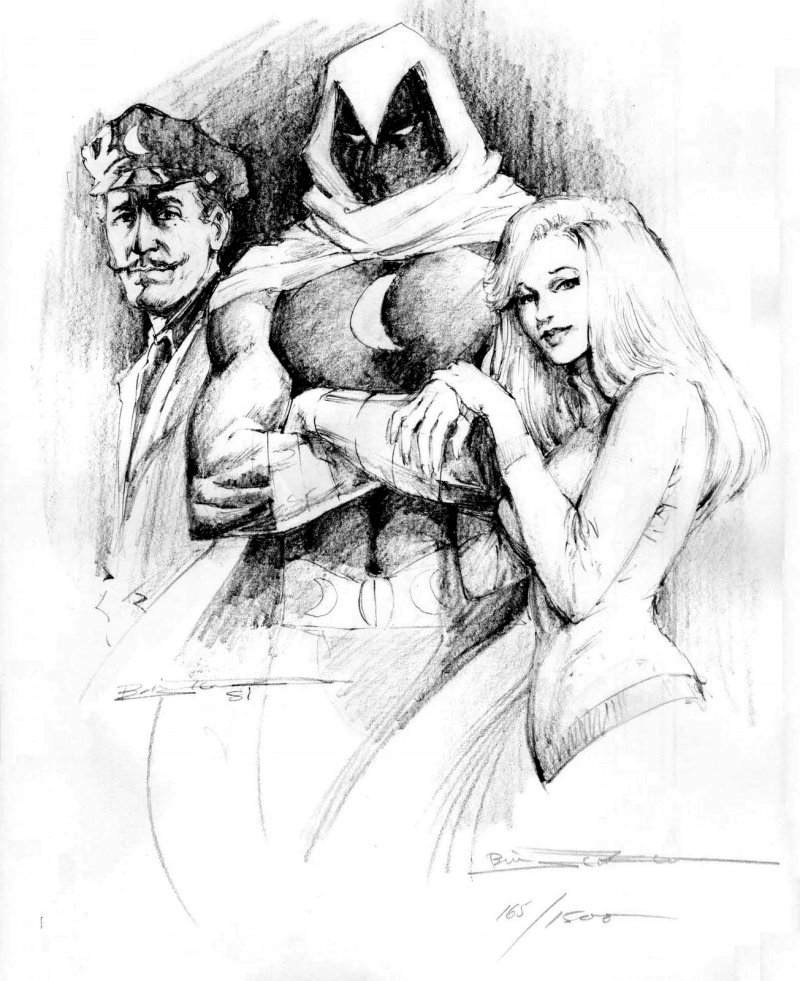
Moon Knight art from Alex Maleev

Yes it is. As someone who holds a strong appreciation for the Moon Knight character, right now is a great time to be a comic book reader. For quite a while his presence was either lacking or not high quality, but it seems like that is all about to change. Marvel is pushing, putting forth their best efforts to put the man of jet and silver in the forefront.

I could not be anymore excited.

I never really hold that much affinity for certain comic book characters. I tend to not read books specifically to just see what characters are up to that particular month. To me, super-hero characters tend to act more as bodies for concepts, and it is the creative talent behind the character that which matters. The character is fictional (obviously), but what a writer or artist can say with a character is not. Super-heroes, especially the casts of the Marvel and DC Universes, work as great, modern day myths, providing fine creative folk opportunity to explore themes not so fantastic on the surface. The capes and cowls provide a dress and harness life’s large ideas and bring them down in a form fit to work in a story. That is usually the way I look at super-heroes. They are characters, but more importantly devices, and writers that understand that tend to produce if not great, then at least interesting comic books.

Moon Knight kind of breaks that mold for me though. While he is very much the shell for a set of ideas, I do read the character for the character’s sake. His character is one I will gladly check in on, and I have read many bad Moon Knight comics just because he was featured in them. I mean, I’m not total “fanboy” about the character, complaining if the costume doesn’t match or if Khonshu pops up or not, but I do buy his various series or appearances like a “fanboy.” When I consider why, I think it all just goes back to when I first found Moon Knight. As a reader, I was living in a world where Spider-man and the Fantastic Four were the “be all, end all.”  These characters, these concepts so “super-heroy” with their spandex suits, powers, catch phrases and wild cast of villains. My reading of only these types of comics was a version of a sheltered, conservative lifestyle. I knew nothing else, and comic books only held that specific visual idea of Spider-man and the FF. Then came a specific issue of Ultimate Spider-man, seventy-nine (79), and gracing the final page in full splash art glory was a character not steeped in the bright blue and red hues of costume attire. Instead, he carried shadows, and his first act before my eyes was his defeat of Spider-man. When I think back to that moment, it was actually pretty meta. One character knocking out the other for my attention. It was sort of a shift in my comic book world view. Moon Knight showed up and opened the door, and ever since I have always found him a character that strikes my interest. For me, he carries this vibe of mystery and and this persona of cool. It is hard to ignore, especially when his actual visual look is considered.

I have carried this enjoyment since then, checking in on all incarnations of the character. For a while, it was simply for the “he’s my favorite” motivation, but in the last year I have really begun to appreciate the character on a whole new level. Moon Knight, all the way back to his origin, is the character so trying to do good. Marc Spector is the man with the questionable instincts and history, but he so wants to be a hero, to be something beyond human. He can never quite achieve that though, and at times the character must face what he truly is inside. I look at that, and I see such a universal concept. We are all Marc Spector. Everyone wants to be someone they are not, forgetting all of their personal faults and leaving behind the earthy shackles of humanity. His character, in such a Marvel way, represents that, and I feel like so many overlook it, labeling Moon Knight simply as “Marvel’s Batman” or a character only suitable for crime stories. Yes, he does work great on a crime story level, but Moon Knight is also much more and his concept can work in many settings. It just takes a skilled writer.

Moon Knight and Cast by Bill Sienkiewicz

Now comes Brian Michael Bendis: a writer who has produced many enjoyable comics, and oddly enough introduced me to Moon Knight. Marvel’s A-game is coming to my favorite character, and from the interviews I have read Bendis’ take looks to really work. I cannot say for certain because the book is months away, but the sole concept of Moon Knight playing “The Avengers” and creating new personas to act as Wolverine or Spider-man is so true to the character. Yes, at the surface it does feel like a very fresh take, but when you look at it it hits the core. Moon Knight is still playing hero and being someone else. Bendis’ “pitch”, his take alone sells to me that the man understands the character. Plus, he looks to also add to the character, putting him in a new setting and taking a step further. How could I ask for more? Oh yeah, Alex Maleev is drawing it. I know Maleev says he does not want to do Sienkiewicz’s Moon Knight, but I cannot help but look at his art so far and see a homage to Bill. An homage that also still feels very Maleev. That is fucking awesome.

I have appreciated the character since 2006, and since 2006 I have been scoffed at for feeling any appreciation. The original stuff usually gets cred, but anything new usually sees flack. Most of it deserves so (except for Charlie Huston’s first arc, “The Bottom”), but I still grow tired of the internet putting Moon Knight down. He is not “Marvel’s Batman.” Honestly, he is one of the most interesting Marvel characters, up there with Daredevil in my opinion. Now is a chance for people to really see that. Marvel is putting two A-listers on this character, and they are putting forth effort to market and create real excitement. I don’t know if this will happen again in such a way with Moon Knight. At least not for a long while. I am sure plenty will still complain about this book and see Moon Knight as nothing significant, but I honestly don’t give a fuck. This, in an odd sense, is a dream come true comic book for me, and I am going to enjoy every last second of it. For ever how many issues are published, I will be talking about this book, even if in some shocking way it sucks (I really doubt it though). I will also live in the build up to the series by re-reading all the old stuff, soaking up all the glory and interesting failure that is Moon Knight. I’m sure further writing will take place up this very blog.

I am a Moon Knight FAN, and I am damn proud. May 2011, I await you.

1 Comment

Filed under Moon Knight

Image Addiction Review: Hack/Slash #1

Hack/Slash #1 Cover B

I have posted a new review over at Image Addiction on Hack/Slash #1. Here’s what I had to say:

“With the topic of “diversity in comics” being so up front recently, Hack/Slash seems to have come just at the right time because this book is certainly unique in a sea of comic books that tend to follow a standard pattern. Hack/Slash packs a tone both exciting and comedic while supplying a vibe familiar of a John Hughes film, and honestly it is very refreshing…”

You can read the rest HERE.

Leave a comment

Filed under Image Addiction Review